
Axis-Y
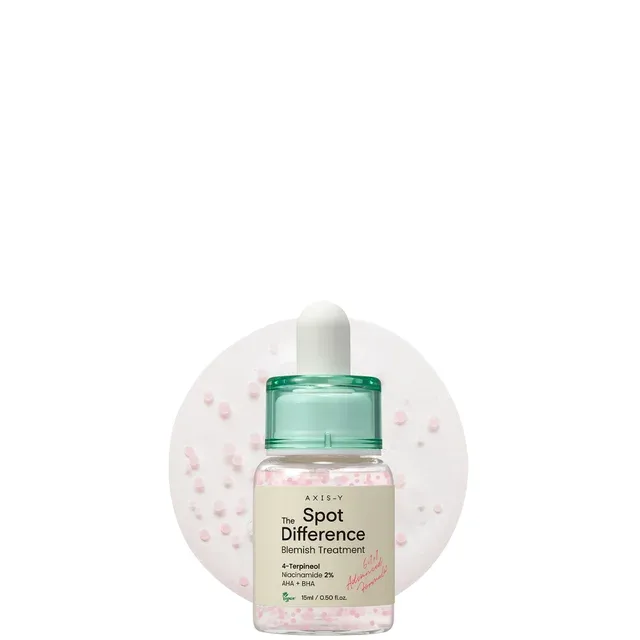
Spot the Difference Blemish Treatment
A calming treatment by Axis-Y — featuring Niacinamide (reduces redness) and Hydrangea Macrophylla Leaf Extract (contains hydrangenol).
47 of 47 ingredients identified
Informational only — check the packaging and a professional for advice.
Two exfoliating ingredients
Contains Glycolic Acid, Salicylic Acid. Monitor for irritation, especially if combined with other actives.
Actives combined with exfoliation
This formula pairs active ingredients with exfoliation. Introduce gradually and watch for sensitivity.
Barrier-support ingredients present
Ceramide NP help reinforce the skin barrier.
Contains fragrance
Fragrance is a common trigger for sensitivity and irritation in reactive skin.
Category breakdown
Soothing · 13Humectant · 8Antioxidant · 5Solvent / vehicle · 4Other · 4Emollient · 3Active · 2Fragrance · 2Surfactant · 2Exfoliant · 2Barrier support · 1Preservative · 1
Relationships
Works well together
Glycerin + Hyaluronic AcidGlycerin + Ceramide NPNiacinamide + Hyaluronic AcidCentella Asiatica + NiacinamideTrehalose + Hyaluronic AcidCeramide NP + NiacinamideBeta-Glucan + Hyaluronic AcidBeta-Glucan + NiacinamideGlycolic Acid + Glycerin
Full ingredient breakdown
2
A gold-standard humectant that draws water into the skin.
5
A polyethoxylated glycerin derivative (26 ethylene oxide units) that provides humectant hydration and improves texture.
6
A versatile vitamin B3 derivative with multiple benefits.
8
A dry extract of aloe vera leaves used to calm and hydrate skin, distinct from aloe leaf juice in processing and concentration.
9
An extract from the flowers of Althaea rosea (common hollyhock) containing mucilaginous polysaccharides and anthocyanins with soothing, hydrating, and mild antioxidant effects; distinct from the root extract.
10
An extract from the brown seaweed Laminaria japonica (Japanese kelp), rich in polysaccharides and minerals, used for hydration, antioxidant protection, and skin conditioning.
11
An extract specifically from the leaves of Eclipta prostrata (false daisy/bhringraj), rich in antioxidant flavonoids and wedelolactone; distinct from the general Eclipta Prostrata Extract.
12
A calming botanical (cica) prized for soothing stressed skin.
13
An extract from the fruit of the common fig (Ficus carica) used for its humectant and antioxidant properties, contributing to skin softness and hydration.
14
A root extract from the David's elm tree (Ulmus davidiana), a K-beauty botanical valued for its soothing, antioxidant, and hydrating properties.
15
An extract from the seeds of Amaranthus caudatus (love-lies-bleeding), naturally rich in squalene, protein, and polyphenols. Used in cosmetics for antioxidant and conditioning properties.
16
A polyphenol-rich antioxidant that also calms skin.
17
An extract from the leaves of Monarda didyma (bee balm) containing thymol, carvacrol, and flavonoids with antimicrobial, anti-inflammatory, and antioxidant properties.
18
An extract from the leaves of Hydrangea macrophylla (bigleaf hydrangea) containing hydrangenol and polyphenols with antioxidant, anti-inflammatory, and potential brightening properties via tyrosinase inhibition.
19
An extract from Mentha aquatica (water mint) containing menthol, flavonoids, and rosmarinic acid that imparts mild soothing, cooling, and antimicrobial benefits to cosmetic formulations.
20
An extract from the leaves of Sasa quelpaertensis, a bamboo species native to Jeju Island, Korea, rich in polyphenols and flavonoids with antioxidant and soothing properties.
21
A water- or glycol-based extract from Melaleuca alternifolia leaves that retains soothing and mild antimicrobial properties from terpinen-4-ol, polyphenols, and flavonoids, with a lower allergen load than the steam-distilled essential oil.
22
Neem leaf extract, traditionally used to calm and condition blemish-prone skin.
23
An extract of false daisy traditionally used for its antioxidant and soothing benefits.
24
A cosmetic extract derived from the leaves of Cinnamomum camphora (camphor tree), delivering antioxidant and mild soothing benefits via leaf polyphenols; distinct from camphor essential oil or the linalool-rich ho wood oil variant.
25
An extract from the leaves of Cryptomeria japonica (Japanese cedar) containing polyphenols and terpenes with anti-inflammatory and antimicrobial properties.
26
An extract from the bark and buds of Pinus pinaster (maritime pine) containing oligomeric proanthocyanidins and phenolic acids with potent antioxidant and anti-inflammatory properties.
29
The hydrosol (distillate water) obtained from Chamaecyparis obtusa (Japanese hinoki cypress), carrying water-soluble antimicrobial and soothing compounds including hinokitiol; distinct from the full plant extract.
30
A sugar-based humectant that holds water and helps skin resist dehydration stress.
38
A skin-identical lipid that rebuilds the barrier.
39
Short-chain fructose polymers used in cosmetics as humectants and prebiotics to hydrate skin and support a balanced microbiome.
40
A polysaccharide humectant that hydrates and calms; often compared to hyaluronic acid.
41
A humectant that can hold many times its weight in water.
43
A botanical that soothes and gently brightens.
45
The smallest AHA; a potent surface exfoliant.
46
An oil-soluble BHA that exfoliates inside the pore.