
Elixir
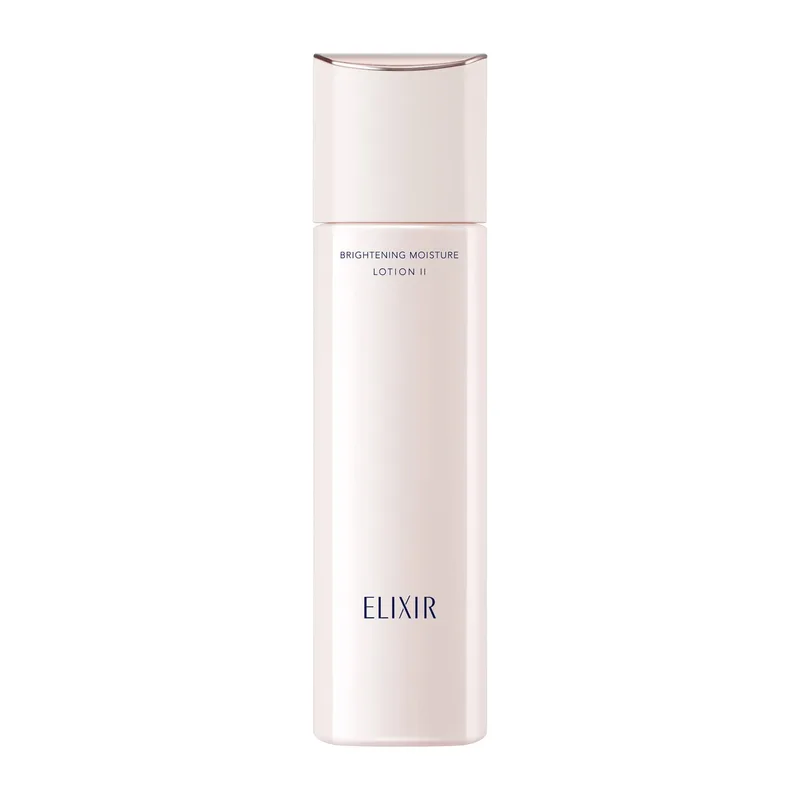
Brightening Moisture Lotion WT
My skin looks noticeably brighter and feels so supple after using this. The lightweight lotion absorbs instantly without any greasy residue.
31 of 31 ingredients identified
Informational only — check the packaging and a professional for advice.
Contains fragrance
Fragrance is a common trigger for sensitivity and irritation in reactive skin.
Category breakdown
Humectant · 8Other · 7Soothing · 4Solvent / vehicle · 4Active · 3Antioxidant · 2Fragrance · 2Preservative · 1
Relationships
Works well together
Potassium Methoxysalicylate + Dipotassium GlycyrrhizateHypericum Erectum Extract + Melilotus Officinalis ExtractMelilotus Officinalis Extract + Dipotassium GlycyrrhizateCoix Lacryma-Jobi (Job's Tears) Seed Extract + GlycerinArtemisia Princeps Leaf Extract + Dipotassium Glycyrrhizate
Full ingredient breakdown
1
A potassium salt of 4-methoxysalicylic acid used as a regulated skin-whitening active in Japanese cosmetics (quasi-drug status). Inhibits melanogenesis and has mild exfoliating properties. Requires daily sun protection.
2
A licorice-root-derived salt that calms inflammation and soothes irritated, reactive skin.
3
An extract from Hypericum erectum (Japanese St. John's Wort). Contains hypericin, pseudohypericin, and quercetin derivatives with antioxidant and soothing properties. Widely used in Elixir and other Shiseido brands.
4
Extract from Melilotus officinalis (yellow sweet clover). Contains coumarin compounds and flavonoids that provide anti-inflammatory and vascular-supporting properties. Used in Japanese toners and emulsions for skin-soothing.
5
A hydrolysate of conchiolin, the structural protein from pearl/nacre (Pinctada spp.). Used in luxury Japanese skincare for its moisturising, conditioning, and film-forming properties.
6
An extract from olive (Olea europaea) leaves, rich in oleuropein, hydroxytyrosol, and flavonoids. Provides potent antioxidant, anti-inflammatory, and mild antimicrobial benefits in skincare.
7
Job's Tears (hatomugi) seed extract, a staple J-beauty botanical valued for calming, hydrating and mild brightening effects on dull or rough skin.
8
A naturally occurring amino acid that acts as a humectant and supports the skin's own moisture-retention system.
9
A naturally occurring cyclohexane polyol (commonly myo-inositol) found in cell membranes, used in cosmetics as a humectant and skin-conditioning agent.
10
A water-soluble form of collagen that hydrates and forms a smoothing film on the skin's surface.
13
A gold-standard humectant that draws water into the skin.
16
A short-chain polyethylene glycol used as a humectant and solvent to hydrate skin and improve the feel and spreadability of formulas.
18
A dimer of glycerin used as a humectant; provides hydration with a slightly richer, more substantive feel than glycerin.
22
A small sugar alcohol that acts as a humectant, drawing water into the skin.
23
An ether derivative of L-ascorbic acid in which the 3-OH position is protected by an ethyl group, making it stable in water-based formulas. Converts to Vitamin C inside skin cells. Used widely in Japanese brightening products (Shiseido, Elixir) as a quasi-drug-adjacent brightening active.
28
The hydrochloride salt of the essential amino acid lysine, used in cosmetics as a humectant and skin-conditioning agent that also supports collagen production.
29
An extract from Japanese mugwort (Artemisia princeps) leaves, known as yomogi in Japan. Rich in flavonoids, chlorogenic acid, and terpenoids; used in Japanese skincare for soothing, antioxidant, and anti-inflammatory properties.