
Matsuyama
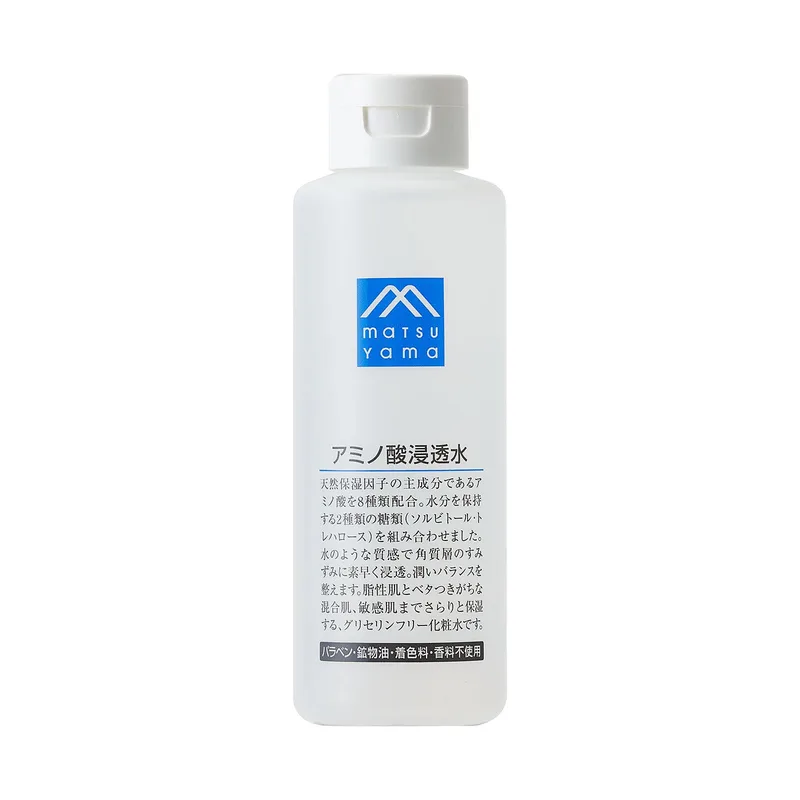
M-mark Amino Acid Infusion
Matsuyama M-mark Amino Acid Infusion Lotion - Any Reviews/Thoughts?
19 of 19 ingredients identified
Informational only — check the packaging and a professional for advice.
Category breakdown
Humectant · 14Solvent / vehicle · 3Surfactant · 1Exfoliant · 1
Relationships
No notable synergies or conflicts detected between the identified ingredients.
Full ingredient breakdown
4
A gentle humectant derived from sugar beets.
5
A sugar alcohol humectant derived from glucose that draws moisture into the skin and improves product texture.
6
A sugar-based humectant that holds water and helps skin resist dehydration stress.
8
A naturally occurring amino acid that functions as a humectant and is a component of the skin's natural moisturizing factor.
9
A naturally occurring amino acid used as a humectant that helps maintain skin hydration and supports the NMF.
10
The simplest amino acid, used as a humectant that supports the skin's natural moisturizing factor.
11
An essential amino acid used as a humectant that contributes to the skin's natural moisturizing factor.
12
The hydrochloride salt of the essential amino acid lysine, used in cosmetics as a humectant and skin-conditioning agent that also supports collagen production.
13
A naturally occurring amino acid that acts as a humectant and supports the skin's own moisture-retention system.
14
A naturally occurring amino acid that functions as a humectant and contributes to the skin's natural moisturizing factor.
15
A cyclic amino acid that functions as a humectant and forms part of the skin's natural moisturizing factor.
16
A component of the skin's natural moisturizing factor (NMF).
17
A component of the skin's natural moisturizing factor (NMF).
18
The sodium salt of lactic acid, a natural component of the skin's NMF used as a humectant and mild pH buffer in moisturizers and toners.
19
A gentler AHA that also has humectant properties.