
Medicube
Deep Vitamin C Ampoule 2.0
A antioxidant-rich ampoule by Medicube — featuring Ascorbic Acid (brightens) and Adenosine (helps smooth fine lines).
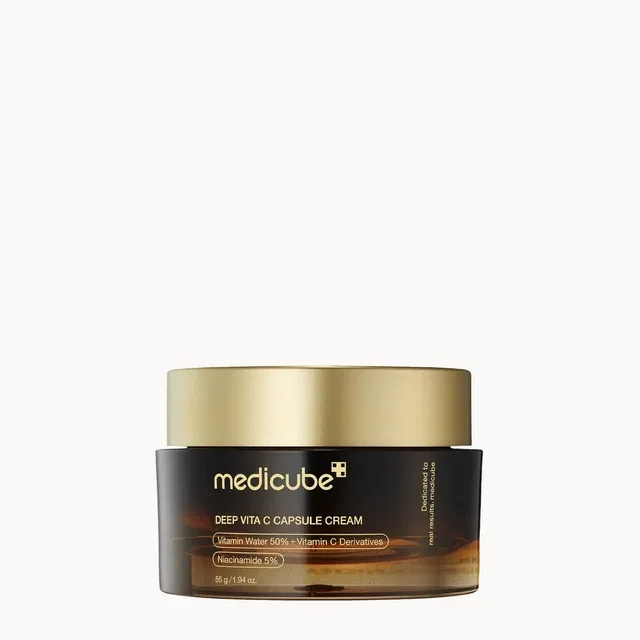
60 of 60 ingredients identified
Informational only — check the packaging and a professional for advice.
Contains fragrance
Fragrance is a common trigger for sensitivity and irritation in reactive skin.
Category breakdown
Antioxidant · 10Other · 9Emollient · 8Surfactant · 7Soothing · 7Humectant · 7Solvent / vehicle · 6Active · 2Fragrance · 2UV filter · 1Preservative · 1
Relationships
Works well together
Ascorbic Acid + TocopherolSodium Hyaluronate + GlycerinGlutathione + Ascorbic AcidGlutathione + TocopherolCitrus Nobilis (Mandarin Orange) Peel Extract + TocopherolLycopodium Clavatum Extract + TocopherolLycopodium Clavatum Extract + Ascorbic AcidRibes Nigrum (Black Currant) Leaf Extract + Ascorbic AcidRibes Nigrum (Black Currant) Leaf Extract + TocopherolHelianthus Annuus (Sunflower) Seed Oil + TocopherolBeta-Carotene + TocopherolBeta-Carotene + Ascorbic AcidCellulose + Xanthan GumTerminalia Ferdinandiana Fruit Extract + Ascorbic AcidTerminalia Ferdinandiana Fruit Extract + Myrciaria Dubia (Camu Camu) Fruit ExtractMyrciaria Dubia (Camu Camu) Fruit Extract + Ascorbic AcidHesperidin + Ascorbic AcidHesperidin + TocopherolErgothioneine + Ascorbic AcidErgothioneine + TocopherolErgothioneine + Glutathione
Full ingredient breakdown
2
Pure vitamin C; a potent antioxidant and brightener.
13
A common chemical UVB filter (octinoxate) permitted up to 10% in EU and 7.5% in US sunscreens, with confirmed endocrine activity at high doses per 2025 SCCS opinion.
18
A chamomile-derived soothing agent.
22
A gentle soothing and skin-conditioning agent.
23
Vitamin E; a lipid-soluble antioxidant that also conditions skin.
26
The salt form of hyaluronic acid; penetrates more readily.
27
Pro-vitamin B5 that soothes and hydrates.
29
A tripeptide antioxidant valued in skincare for its skin-brightening and free-radical-scavenging effects.
31
Extract from the peel of Citrus nobilis (Mandarin orange). Contains polymethoxylated flavones (PMFs), hesperidin, and limonene. Used for antioxidant protection and mild brightening. Distinct from Citrus Reticulata and Citrus Sinensis in its flavone profile.
32
Lycopodium Clavatum Extract is derived from the stag's horn clubmoss (Lycopodium clavatum), a primitive vascular plant. The extract contains lycopodine and related alkaloids, flavonoids (apigenin, luteolin), and phenolic acids. In cosmetics it is used as an antioxidant and skin-conditioning botanical at low concentrations. Distinct from the spore powder (Lycopodium Powder) sometimes used as a bulking agent.
33
An extract from Equisetum arvense (common horsetail) herb, one of the richest plant sources of organic silica. Provides astringent, soothing, and antioxidant benefits; silica content supports skin firmness.
34
A polysaccharide humectant that hydrates and calms; often compared to hyaluronic acid.
35
Cupressus Sempervirens Leaf/Stem Extract is an aqueous or hydroalcoholic extract from the leaves and stems of the Mediterranean (Italian) cypress. The extract provides proanthocyanidins, quercetin, rutin, and cedrol with antioxidant, astringent, and antimicrobial properties. Used in premium Korean skincare (Medicube vitamin C ampoules) as part of a multi-botanical complex for its pore-refining and antioxidant character.
36
A nucleoside used at low concentrations to help smooth the look of fine lines; a common K-beauty anti-aging active.
37
An extract from the leaves and stems of Hedera helix (English ivy) with anti-inflammatory and soothing properties, used at low concentrations in cosmetic formulas.
39
Ribes Nigrum (Black Currant) Leaf Extract is derived from the leaves of the black currant shrub. Distinct from the more commonly used black currant seed oil and berry extract, the leaf extract is particularly rich in quercetin, myricetin, rutin, and caffeic acid derivatives with potent antioxidant and anti-inflammatory activity. Used in Korean vitamin C ampoules and antioxidant serums as a polyphenol-rich botanical active.
42
A gold-standard humectant that draws water into the skin.
44
A sugar alcohol humectant derived from glucose that draws moisture into the skin and improves product texture.
49
A carotenoid pigment found in carrots, algae, and other plants. Functions as an antioxidant and as provitamin A (converts to retinol in the body). In skincare, also used as a colorant and antioxidant booster.
51
A naturally occurring amino acid that acts as a humectant and supports the skin's own moisture-retention system.
53
An antioxidant naturally found in skin cells.
55
Terminalia Ferdinandiana Fruit Extract is derived from Kakadu plum, an Australian native fruit (Terminalia ferdinandiana). It holds the record for the highest natural vitamin C concentration of any fruit globally (up to 5300 mg/100g), far exceeding rosehip, acerola, and other 'vitamin C fruits'. The extract also provides ellagic acid, punicalagin, gallic acid, and other polyphenolic antioxidants. Used in premium vitamin C and brightening formulas alongside synthetic ascorbic acid derivatives.
56
Myrciaria Dubia (Camu Camu) Fruit Extract is derived from the camu camu fruit native to the Peruvian and Brazilian Amazon. The fruit has one of the highest natural vitamin C concentrations of any food, providing both ascorbic acid and related polyphenol antioxidants (anthocyanins, ellagic acid) in the extract. Used in premium Korean skincare as part of natural vitamin C complex ingredients alongside synthetic derivatives.
57
A hydrolyzed complex of mixed saccharides (polysaccharides broken into smaller sugar units) used as a humectant and skin-conditioning agent in toners, essences, and hydrating serums.
58
Hesperidin is a flavanone glycoside found primarily in citrus fruit peel — particularly orange and lemon. It is one of the most studied citrus bioflavonoids, with documented antioxidant, anti-inflammatory, and vascular-protective properties. In cosmetics, hesperidin is used for its antioxidant activity and potential contribution to brightening and anti-aging effects. It is distinct from the semisynthetic Hesperidin Methyl Chalcone, which is more specifically used for capillary strengthening.
59
Short-chain fructose polymers used in cosmetics as humectants and prebiotics to hydrate skin and support a balanced microbiome.
60
Ergothioneine (L-ergothioneine, EGT) is a naturally occurring amino thione acid originally found in ergot fungi. It is synthesized in nature only by fungi and certain bacteria, but is avidly accumulated by human cells (especially tissues under oxidative stress) via the highly specific OCTN1 transporter. This unique cellular uptake mechanism distinguishes ergothioneine from most antioxidants — it is actively concentrated inside cells rather than merely acting on the surface. In cosmetics it functions as a premium anti-aging antioxidant active used in high-performance vitamin C ampoules and anti-aging serums.