
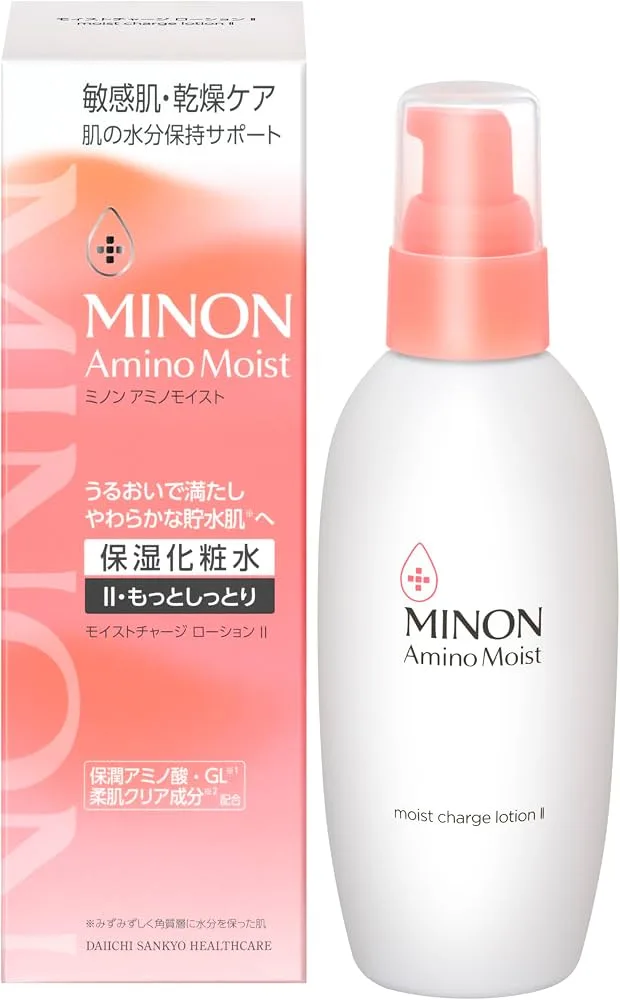
Minon Amino Moist
Moist Charge Lotion II Extra Moist
Glides on with a luxurious cream feel, then melts into skin for deep, lasting hydration.
41 of 41 ingredients identified
Informational only — check the packaging and a professional for advice.
Barrier-support ingredients present
Calcium Phosphoryl Oligosaccharide help reinforce the skin barrier.
Category breakdown
Humectant · 18Surfactant · 5Solvent / vehicle · 4Other · 4Antioxidant · 4Emollient · 2Barrier support · 1Soothing · 1Exfoliant · 1Preservative · 1
Relationships
Works well together
Glycerin + Hyaluronic AcidCholesteryl/Octyldodecyl Lauroyl Glutamate + Hyaluronic AcidCarnosine + TocopherolGlucosyl Rutin + Glucosyl HesperidinCalcium Phosphoryl Oligosaccharide + GlycerinGlyceryl Glucoside + Hyaluronic AcidSodium Hyaluronate + Glycerin
Full ingredient breakdown
2
A gold-standard humectant that draws water into the skin.
5
A methyl glucoside ethoxylate (20 ethylene oxide units) used as a gentle humectant that provides lasting hydration with a non-tacky finish.
6
An essential amino acid used in cosmetics as a humectant that supports the skin's natural moisturizing factor system.
7
An essential amino acid used as a humectant that contributes to the skin's natural moisturizing factor.
8
A naturally occurring amino acid that functions as a humectant and is a component of the skin's natural moisturizing factor.
9
An essential branched-chain amino acid used as a humectant that helps maintain skin hydration as part of the skin's natural moisturizing factor.
10
A cyclic amino acid that functions as a humectant and forms part of the skin's natural moisturizing factor.
11
A semi-essential amino acid naturally present in the skin's NMF that acts as a humectant and antioxidant to hydrate and protect skin.
12
The simplest amino acid, used as a humectant that supports the skin's natural moisturizing factor.
13
A naturally occurring amino acid used as a humectant that helps maintain skin hydration and supports the NMF.
14
A naturally occurring amino acid that acts as a humectant and supports the skin's own moisture-retention system.
17
The hydrochloride salt of the essential amino acid lysine, used in cosmetics as a humectant and skin-conditioning agent that also supports collagen production.
18
A dipeptide antioxidant that helps neutralize free radicals and protect proteins from glycation, supporting skin resilience over time.
19
An enzymatically glycosylated form of rutin (a bioflavonoid from buckwheat and apple) with greatly improved water solubility. Provides antioxidant and mild anti-inflammatory benefits, and is often used in brightening and barrier-support formulas.
20
A proprietary calcium salt of phosphorylated oligosaccharides used in Minon Amino Moist formulas. Clinical studies show it stimulates ceramide production in keratinocytes, reinforcing the skin's moisture barrier — especially beneficial for dry, sensitive, and atopic-prone skin types.
21
A glucose-based humectant that hydrates and supports the skin's own moisture-management systems.
22
An enzymatically glycosylated form of hesperidin (a citrus bioflavonoid) with superior water solubility. Provides antioxidant and mild anti-inflammatory benefits, and is often paired with other flavonoids in sensitive-skin and brightening formulas.
23
A licorice-root-derived salt that calms inflammation and soothes irritated, reactive skin.
24
A medium-chain polyethylene glycol used as a humectant and solvent that helps retain moisture and improve formula texture.
26
An AHA most often used in small amounts to adjust pH.
27
A gentle humectant derived from sugar beets.
31
Vitamin E; a lipid-soluble antioxidant that also conditions skin.
33
A component of the skin's natural moisturizing factor (NMF).
39
The salt form of hyaluronic acid; penetrates more readily.
40
A humectant that can hold many times its weight in water.